
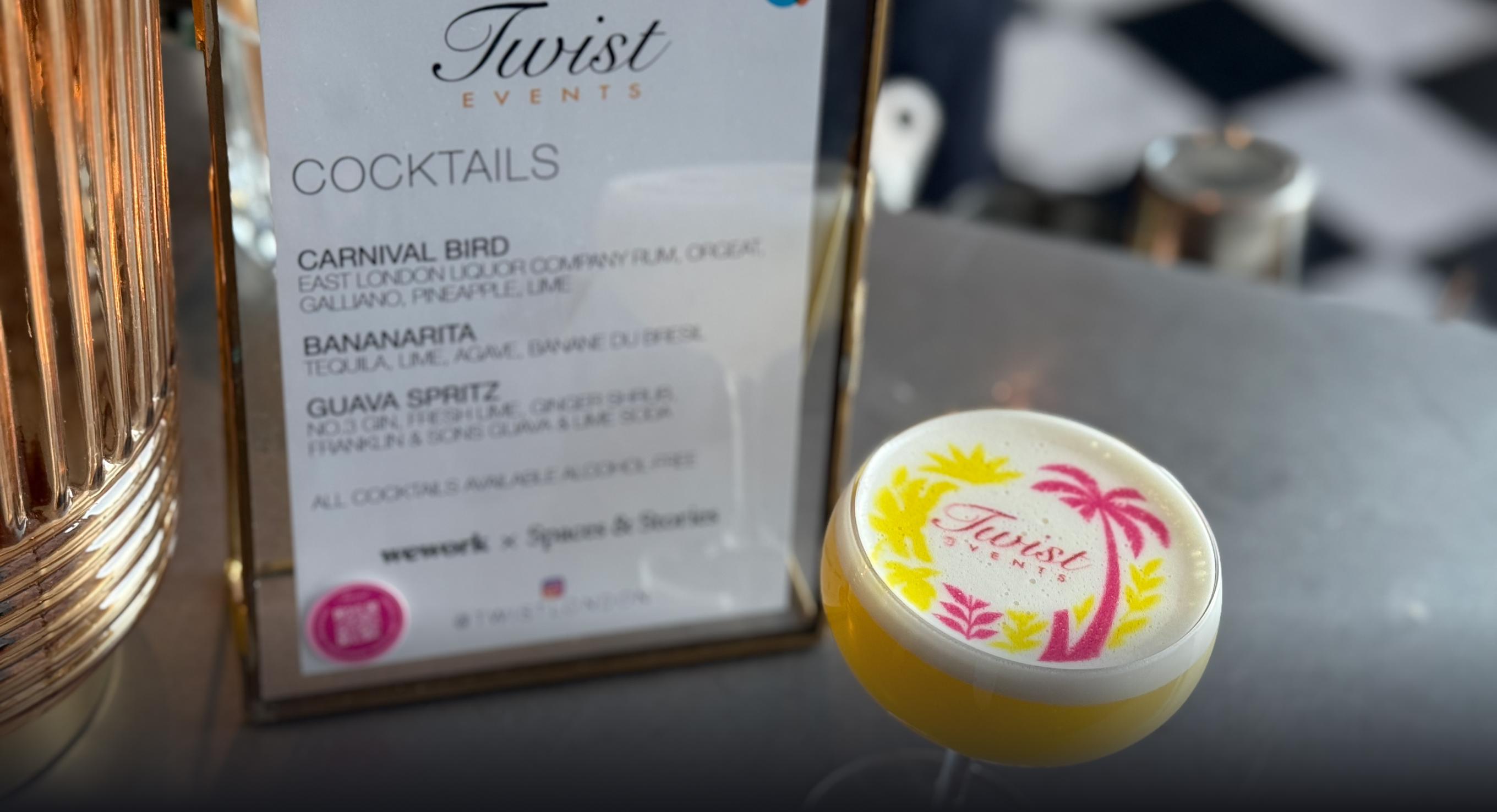

You may already have a good bar team, a cocktail partner you trust, or a drinks offer that works well for most events. The question is where an additional specialist could be useful: a more ambitious menu, several events on the same night, a branded installation or a brief that needs more preparation than usual.
This guide is for caterers and event agencies considering a cocktail partner. It explains what to compare, how to protect the client relationship and how to work out whether the arrangement makes practical and commercial sense.
When is a specialist cocktail partner useful?
Start with the part of the brief that needs support. Bringing in another company should make that part easier to deliver and give the client a clear benefit.
- A more involved cocktail brief: bespoke development, preparation and presentation beyond the regular drinks list.
- A busy date: additional capacity while your own team concentrates on the rest of the event.
- A corporate activation: a bar and menu that reflect the client’s brand, with the production and service planned together.
- A venue without a working bar: a mobile installation, glassware and the practical operation around it.
- A concentrated reception: a service plan for a large group arriving in a short window.
For a straightforward event that your existing team already handles well, you may not need an external cocktail service. A useful partnership gives you another option when the brief calls for it, without requiring you to change the way every event works.
Assess the cocktail operation, as well as the drinks
A tasting tells you about the menu. It does not show how the team will prepare, transport and serve it in a room full of guests.
Ask how the proposed drinks will be delivered at the expected pace. Who prepares the ingredients? What happens when everyone orders at once? Where will fresh glassware, ice and replenishment stock sit? Who keeps those supplies moving while the bartenders serve?
A bar back or support role can be an important part of the plan. Adding bartenders alone may not resolve a bottleneck caused by glass collection, replenishment or an awkward service layout. The team and bar footprint should follow the menu, guest flow and venue access.
At Twist, we can bring menu development, preparation, professional cocktail bartenders, glassware, ice and logistics into one agreed service. The proposal should make clear exactly what we are taking care of and where our work meets yours.
Keep the client relationship clear
Agree how the cocktail team will be introduced before anyone starts contacting the client. You may want one point of contact through your team, a joint planning call or direct discussion on a specific technical detail.
At Twist, you lead the client relationship. Together, we agree who speaks to the client, how proposals are presented and the way our team works alongside yours. Branding, uniforms and any use of event photographs should be discussed as part of that arrangement.
The working plan should identify who approves menus, numbers, additions and changes on the day. That gives both teams a clear route for decisions and helps prevent unexpected costs being agreed without the right person involved.
Compare the total cost of delivering the drinks
A fair comparison includes the work before and after service: menu preparation, purchasing, glassware, ice, bar setup, transport and pack-down, as well as the team serving guests.
Twist has its own bars, glassware and equipment, so you would not need to arrange separate hire for the drinks service where those items are included in our proposal. Having these in-house can help us keep the complete service competitively priced. The useful comparison is the total cost for the same brief, with the same inclusions.
Ask for a clear scope covering guest numbers, service hours, drinks allocation, staffing, glassware, bar and logistics. Transport and access costs should be visible from the start, and optional branding or production should be identified separately.
Partner pricing and working arrangements are agreed around each brief. There is no single percentage or package that makes sense for every event. Discuss how the service fits into your proposal, who invoices whom and how any changes will be approved.
A short menu can still be fully bespoke
Choosing three cocktails for an event does not mean choosing three drinks from an unchanging list. The menu can be developed around the food, the client’s preferences, the season and the feel of the occasion.
Three menu choices and three drinks per guest also mean different things. State both the menu selection and the drinks allocation in the proposal so the client knows what is included.
Consider alcohol-free drinks at the same stage as the rest of the menu. Discuss flavour, presentation, ingredients and any dietary requirements, rather than treating the alcohol-free offer as a last-minute substitution.
For branded events, choose the details that serve the brief. A considered bar front, a personalised menu or a printed cocktail may be appropriate. Each addition needs to work with the service pace and the space available. Explore Twist’s branded bars and personalised cocktails.
Agree where the two teams meet
Most practical gaps sit between suppliers rather than within a single job. A short shared plan can identify them before the event.
- Arrival: access bookings, supplier contacts, unloading and setup order.
- Service: bar opening, reception drinks, food timings, speeches and the last order.
- Staffing: who serves at the bar, circulates drinks, collects glasses and supports replenishment.
- Facilities: power, water, storage, refrigeration and the route for used glassware.
- Close: pack-down, waste, equipment collection and the agreed cleaning scope.
- Changes: who can approve additional guests, drinks, hours or production costs.
Keep the plan proportionate. A small reception needs clear responsibilities, not a lengthy document nobody has time to read.
Ask for relevant event experience
Look for experience that answers the challenge in your brief. A photograph shows the finished bar; ask what the supplier was responsible for and how they worked with the venue and other teams.
Twist is on Battersea Arts Centre’s Event Partner List and has delivered bars for the CLASS Bar Awards at the venue. That is a useful starting point for a conversation about multiple bars and coordinated service in a historic building. A smaller office reception will have different requirements, and should be planned on its own terms.
Start with a conversation and one useful brief
You do not need to commit to a new supplier arrangement to explore whether there is a fit. A live brief, or an anonymised past event, gives both teams something concrete to discuss: what you normally provide, where support would help and what a complete cocktail service could cost.
Tell us the event date or example format, venue, guest numbers, service times and what you already have in place. We can discuss a complete cocktail service or a clearly defined role alongside your team.
Arrange a conversation with Twist. If you are planning an office event, our office cocktail-bar planning guide sets out the access and facilities details worth checking first.
Discover Related Blog Posts


Subscribe to The Plot Twist
Real-life stories of close calls, crises averted and calamities pacified in this one-of-a-kind newsletter. Learn how to steady a storm, while sitting on the edge of your seat.